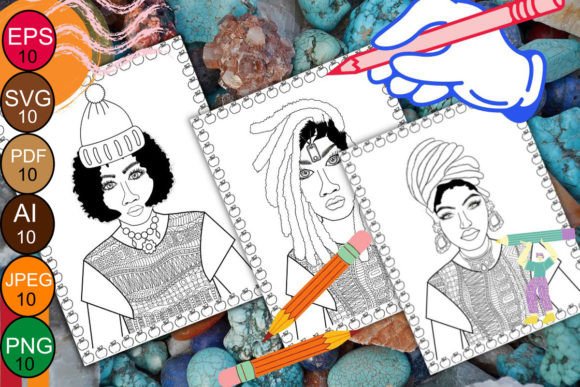
An Honest Review of African Fashion Girls Coloring Pages for Embroidery
When you’re choosing a new embroidery file for a client project or your shop, it’s not just about the design itself. It’s about imagining that design stitched out, on fabric, in a real product. You’re thinking about how it will feel in the hoop, how the thread will lay, and ultimately, how your customer will react when they see it. That’s the lens I’m using to look at African Fashion Girls Coloring Pages. Let’s walk through what this set might mean for your next project.
The Immediate Mood and Design Personality
Opening this file, my first thought was about celebration and individuality. The theme isn’t just generic; it carries a specific, joyful energy. The shapes are bold and expressive, with a focus on fashion and style. This isn’t a delicate, minimalist graphic. It has a visual personality that feels confident and vibrant. For embroidery, that translates to a design that wants to be a focal point. It naturally belongs on products where the artwork is the star—think a statement tote bag for a boutique, a featured pillow cover in a nursery, or the central element on a custom sweatshirt. The level of detail suggests it’s well-suited for medium to larger hoop sizes where those fashion elements can be clearly defined by satin stitches and fill areas.
Where This Design Shines in Real Projects
Imagine you’re preparing a custom order for a personalized gift. A client wants an embroidered baby blanket with a unique, cultural touch. African Fashion Girls Coloring Pages offers that unique, celebratory imagery. Stitched onto a soft blanket background with careful thread color selection, it becomes a heartfelt heirloom. Or, as a small business owner, you’re curating a new line of embroidered aprons for your Etsy shop. This design, placed centrally, creates an apron that’s not just functional but tells a story—it becomes a product with a strong visual identity.
For apparel decorators, this could be a powerful choice for a limited-run sweatshirt or t-shirt, especially for events or communities that appreciate the theme. As an embroidered patch, it holds enough visual weight to stand alone on a cap or backpack. For home decor, like pillow covers or tea towels, it injects personality and a handmade, artful feel. In commercial embroidery, for a small shop’s branded merchandise or craft fair products, it provides a ready-made, professional-looking asset that elevates the perceived value of the finished product.
Practical Considerations and Careful Use
This is where the designer’s mind really kicks in. While the bold shapes are advantageous, you need to consider the execution. On very small hoop sizes, some of the finer details within the fashion elements might become challenging—tight corners or small accent areas could get lost. I’d advise testing it on scrap fabric at your intended size first.
Textured or stretchy fabrics will require extra attention to stabilizer to keep those clean lines. If you’re planning to stitch it onto dark fabric, your thread color contrast becomes absolutely critical; you need to ensure the design pops without needing overly dense stitch areas that could stiffen the fabric. Layered garments like caps with curved surfaces demand careful digitizing, so you’d need to confirm the embroidery file’s suitability for such applications. And for products destined for frequent washing, like baby clothes or kitchen towels, checking the stitch density is key—too dense can make the fabric rigid and less durable over time.
Turning a Digital File into a Trusted Product
How does using African Fashion Girls Coloring Pages affect the final product’s appeal? When stitched well, it enhances stitching clarity through its defined shapes, which builds customer trust in your craftsmanship. For a handmade presentation, it offers a unique motif that feels less mass-produced. For brand consistency, if your shop celebrates diverse and vibrant art, it aligns perfectly. Its giftability is high—it feels personal and special. For buyer engagement, especially in online listings like Etsy, it creates a strong visual hook in your printable mockups and digital product previews.
From a professional standpoint, it provides a ready-to-use design asset that can save time, but the responsibility to execute it well remains with you. That professionalism is communicated through your final, clean embroidery work.
Essential Designer Notes Before You Hoop It
Before you commit this to a client’s item or your inventory, run through your checklist. Always test the embroidery design on scrap fabric that mimics your final product material. Check your thread color palette against your fabric background—do a quick test on both light and dark scraps if you plan to offer both options. Review the stitch density by looking at the stitched test piece; is it too stiff for a baby blanket, or perfect for a sturdy tote bag?
Confirm your intended hoop size can accommodate the design without losing important detail. Inspect the small details in your test stitch—are any areas too tiny or complex to render cleanly? It’s also wise to test the design concept in black and white mockups to see if the composition holds strong even without color, which speaks to its fundamental shape quality.
A critical step: check the included formats and the licensing terms. The description mentions “all the formats you might need,” so you’ll need to verify the specific embroidery file formats provided and ensure they are compatible with your machine. More importantly, you must confirm the license before selling any finished items or commercial embroidery projects. Does it allow for physical product sales? Is it suitable for digital product resale? Never assume.
Using a design like this for a craft business or as an Etsy seller means blending a great digital asset with your skill. It can result in a beautiful finished product—an embroidered patch, a custom apparel piece, a holiday embroidery gift—that carries both your quality and its unique artistic spirit.
In the end, African Fashion Girls Coloring Pages presents a vibrant, themed opportunity. Its value isn’t just in the download; it’s in what you, as the maker, do with it. With careful testing, thoughtful application, and clear licensing, it can become a standout part of your embroidery project lineup, creating products that feel both handmade and thoughtfully designed.